Most importers and exporters know they need a CHA agent -- but very few understand how a CHA customs agent actually operates within India's customs system. What happens after documents are submitted? How does risk assessment work? Why does one shipment clear in 24 hours while another sits for five days? This guide answers those questions in full, giving you a practical understanding of how the Indian customs system functions and how an experienced CHA makes it work in your favour.
What Is CHA Customs and Why It Matters
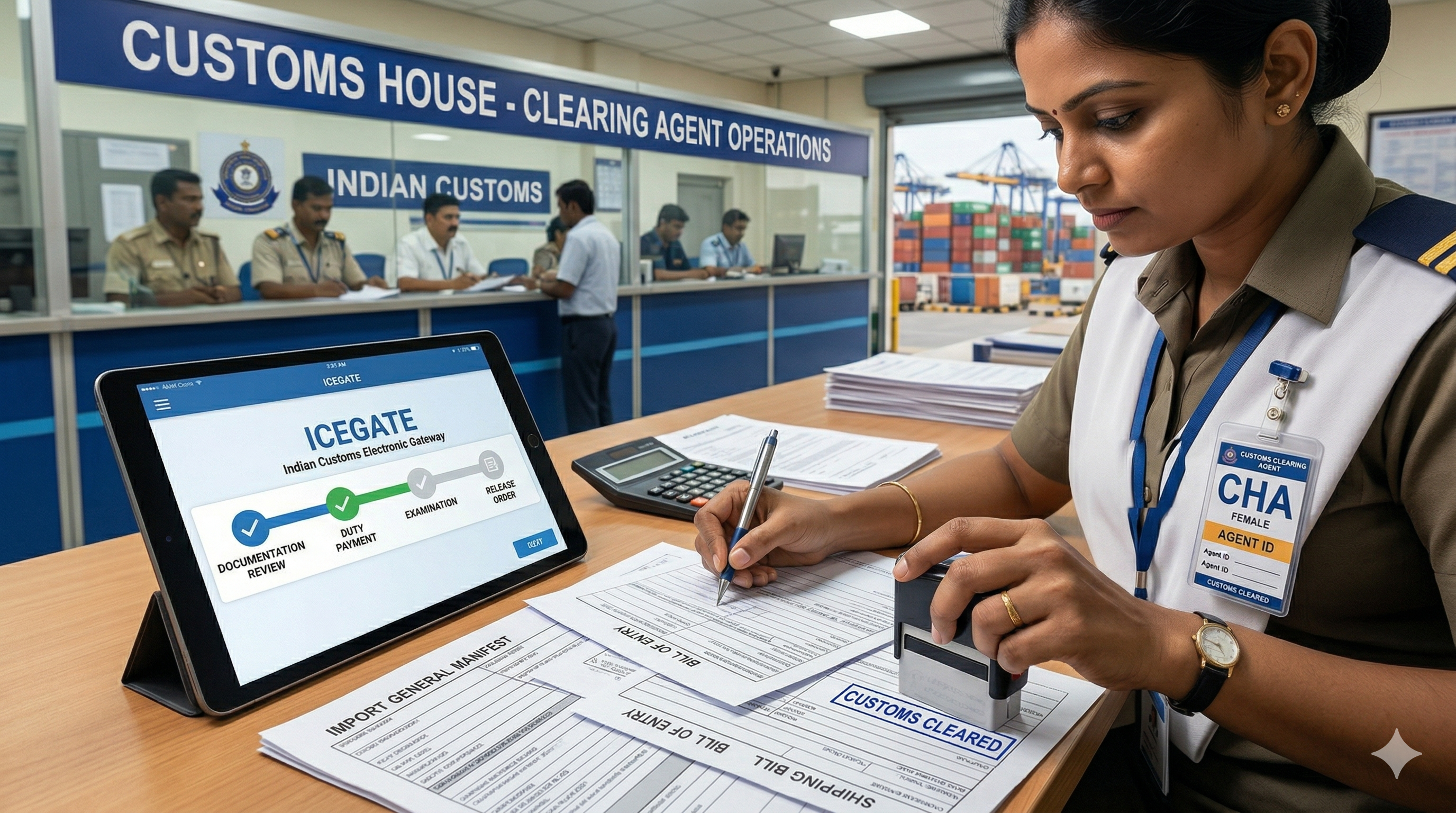
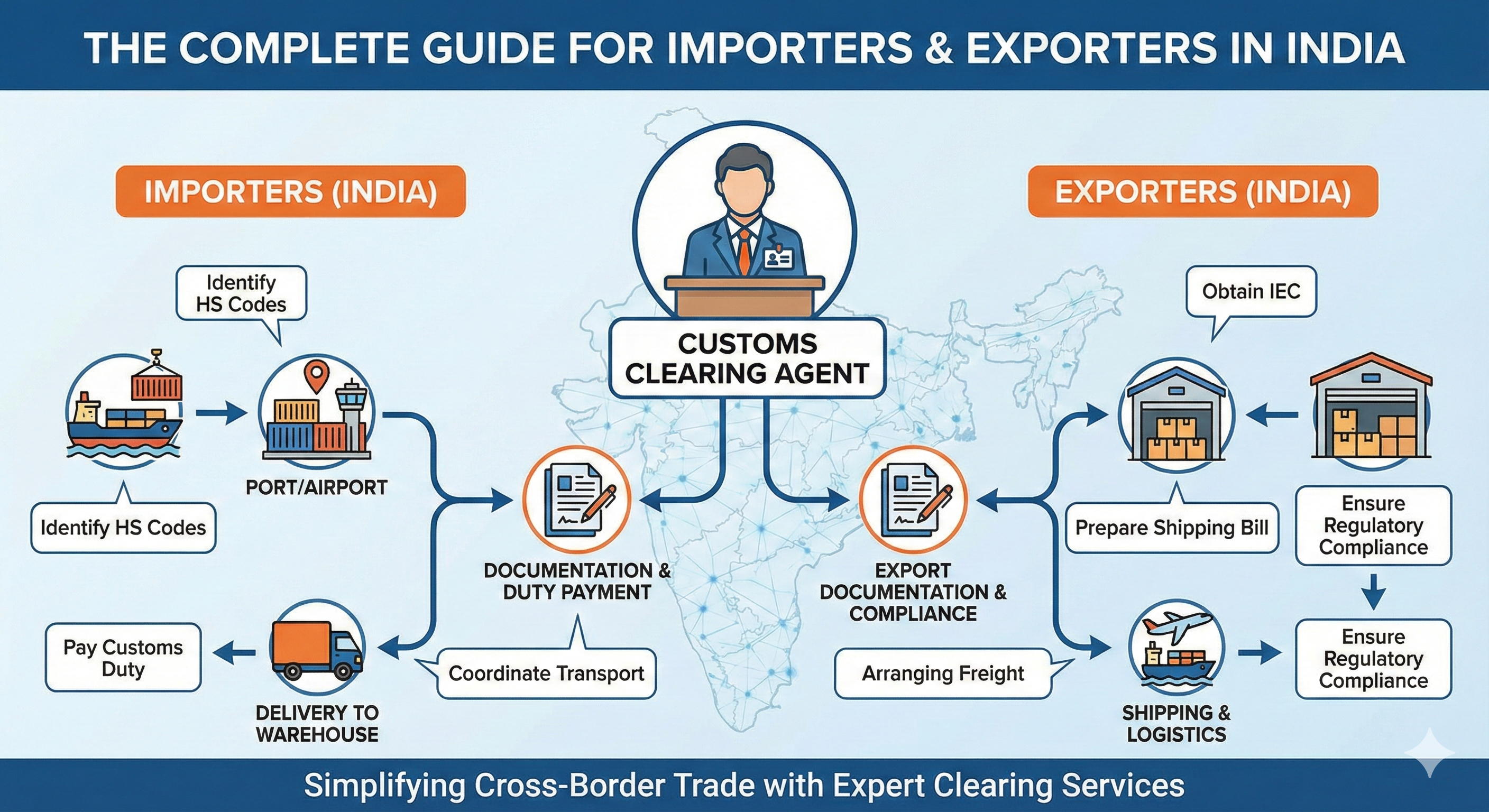
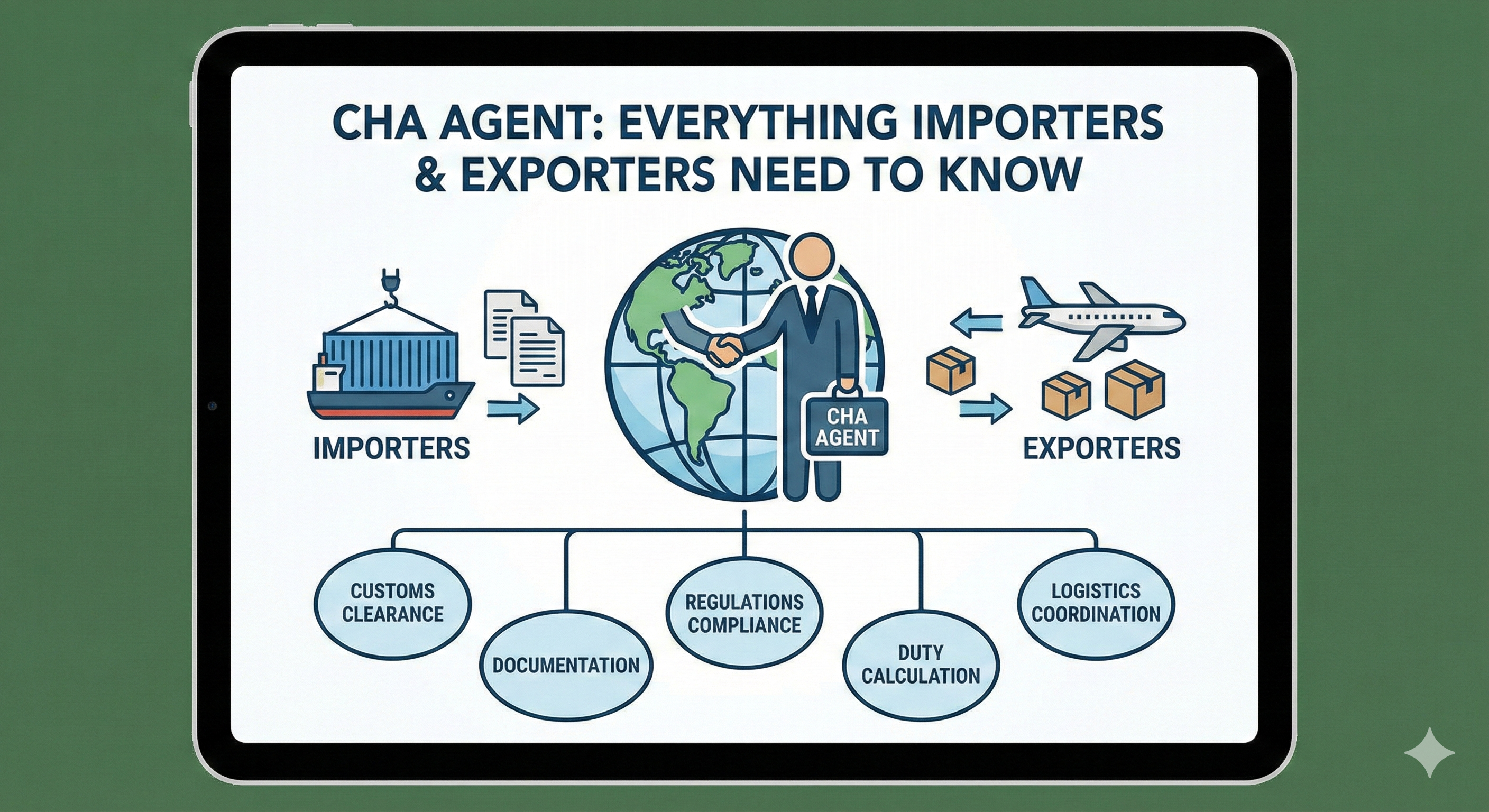
The term CHA customs refers to the role a licensed Customs House Agent plays within India's official customs clearance machinery. A CHA agent is not simply a document courier. They are a licensed professional who operates directly inside the Indian customs system -- filing declarations, paying duties, coordinating examinations, resolving disputes, and maintaining compliance records on behalf of importers and exporters.
India's customs administration is governed by the Customs Act, 1962 and administered by the Central Board of Indirect Taxes and Customs (CBIC) under the Ministry of Finance. CBIC oversees all import and export clearance activity at every port, airport, land customs station, and inland container depot in the country.
CHA agents are governed by the Customs Brokers Licensing Regulations (CBLR), 2018. This regulation defines their obligations, prohibited conduct, licensing requirements, and the penalties for non-compliance. Every licensed CHA is directly accountable to CBIC and must maintain high standards of accuracy and integrity to retain their license.
Understanding what a CHA customs agent actually does inside this system helps you set realistic expectations, understand why certain steps take time, and choose a CHA agent who genuinely protects your interests.
ICEGATE: The Digital Platform at the Centre of CHA Customs Work
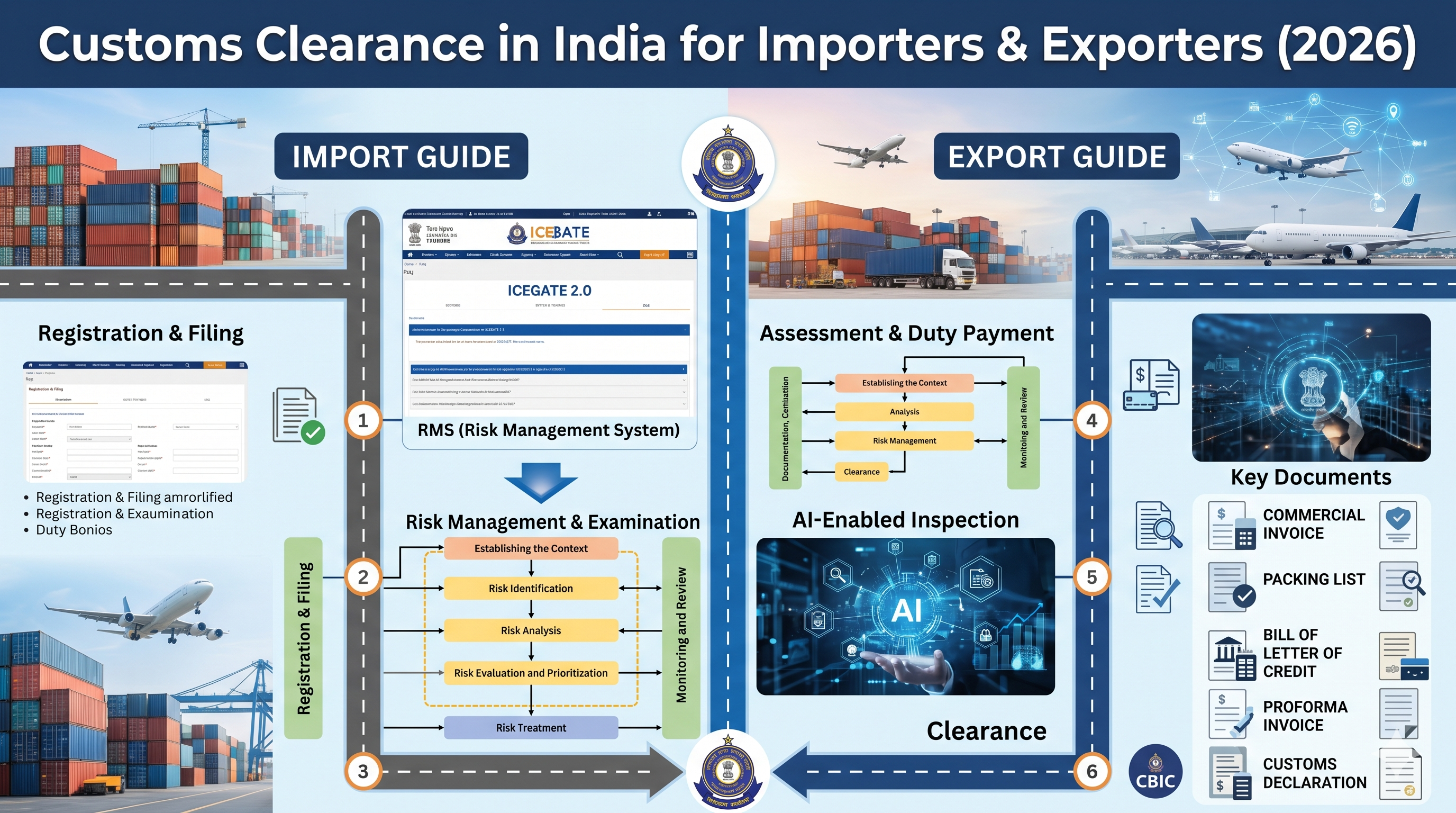
ICEGATE -- Indian Customs Electronic Gateway -- is the national customs portal through which all CHA customs filings are made. For a CHA agent, ICEGATE is the primary work environment. Every Bill of Entry, every Shipping Bill, every duty payment, and every communication with customs officers flows through this platform.
The platform is integrated with customs offices across India, the GSTN for GST reconciliation, the Reserve Bank of India for foreign exchange reporting, and DGFT for export-import policy compliance. When a CHA customs agent receives your documents, preparing the ICEGATE filing is the first substantive step in the clearance process.
Bill of Entry Filing
This is the primary import declaration. The CHA logs onto ICEGATE, enters all shipment details -- HS code, declared value, quantity, country of origin, applicable duty exemptions -- and submits electronically. The system assigns a Bill of Entry number and the file moves into the risk assessment queue.
Shipping Bill Filing
This is the export equivalent. The CHA files it before cargo arrives at the port for examination and loading. The Shipping Bill captures the goods description, declared value, applicable export scheme, and the exporter's compliance status.
Duty Payment
After assessment is finalised, the CHA initiates payment through the ICEGATE integrated payment gateway using an authorised bank. Payment confirmation is received electronically and recorded against the Bill of Entry before Out of Charge is granted.
Status Monitoring and Query Response
The CHA tracks each Bill of Entry in real time -- watching for assessment completion, examination orders, and query notices from customs officers. Any delay in responding to a query holds cargo at the port and accumulates demurrage. An experienced CHA monitors ICEGATE continuously and responds accurately and promptly to every officer communication.
2026 Update: CBIC Circular 06/2026 expanded Auto-OOC to all compliant importers and introduced e-seal-based Auto Goods Registration for exports. AEO-certified importers and those with clean supply chain histories now benefit from fully system-driven clearances with no manual officer intervention at multiple stages. Arrow Shipping's AEO certification means clients are positioned to benefit from these automation facilities directly.
Risk-Based Assessment: The Four Customs Channels
When a CHA files a Bill of Entry, the Risk Management System (RMS) analyses the declaration and assigns it to one of four assessment channels. The channel determines how much examination the cargo undergoes and how quickly it clears customs. This is one of the most important mechanisms in CHA customs practice, and an experienced CHA agent files accurately and consistently to influence channel assignments in the importer's favour.
Green Channel
Straight-through clearance with no examination of documents or cargo. Once duty is paid, Out of Charge is issued automatically. This is the fastest possible outcome -- clearances can complete within hours of cargo arrival. Green channel assignments go to importers with strong compliance histories, AEO certification, and clean filing records.
Yellow Channel
Document verification by a customs officer is required. The officer reviews the Bill of Entry and supporting documents but does not physically inspect the cargo. If documents are complete and consistent, assessment is completed promptly. An experienced CHA ensures documents are prepared to the standard required, making yellow channel processing straightforward.
Orange Channel
Both document verification and physical examination of cargo are required. The customs officer checks documents and then inspects the consignment at the Container Freight Station or port examination area. The CHA coordinates the examination appointment, presents the cargo, attends in person, and addresses any discrepancies found immediately at the examination itself.
Red Channel
Intensive physical and document examination. Reserved for high-risk shipments, commodities flagged by customs intelligence, or consignments with complex compliance requirements. The examination is thorough and the CHA must attend throughout -- managing the process and ensuring that minor discrepancies do not escalate into formal show-cause notices.
What Determines the Channel Assignment
The importer's compliance history is the single most influential factor. A clean, consistent record with no past discrepancies consistently results in more green and yellow clearances over time. Commodity risk also matters -- chemicals, electronics, pharmaceuticals, and agricultural products carry higher examination risk regardless of the importer's individual record. Country of origin risk, declared value patterns, and AEO certification all contribute to the RMS decision for each consignment.
How Arrow Shipping Helps: Our 30-year track record of accurate, consistent ICEGATE filings means that clients who import regularly through us build a positive compliance profile recognised by the RMS. Combined with our AEO certification, this consistently results in faster channel assignments and fewer examination delays across our clients' shipments.
Import Customs Clearance: The Complete CHA Process
The following steps cover the full import clearance sequence managed by a CHA customs agent from document receipt to cargo delivery.
- Pre-Arrival Document Review The CHA collects the commercial invoice, packing list, Bill of Lading or Air Waybill, and any product certificates before cargo arrives at port. Reviewing documents in advance catches discrepancies and allows corrections before filing -- preventing avoidable delays once the shipment is at port.
- HS Code Classification and Duty Calculation The CHA classifies goods under the correct ITC-HS code from the Customs Tariff Act. This determines every duty applicable: Basic Customs Duty, Integrated GST, Social Welfare Surcharge, and any anti-dumping or safeguard duties. Incorrect classification is the most common cause of customs demand notices and post-clearance audit findings.
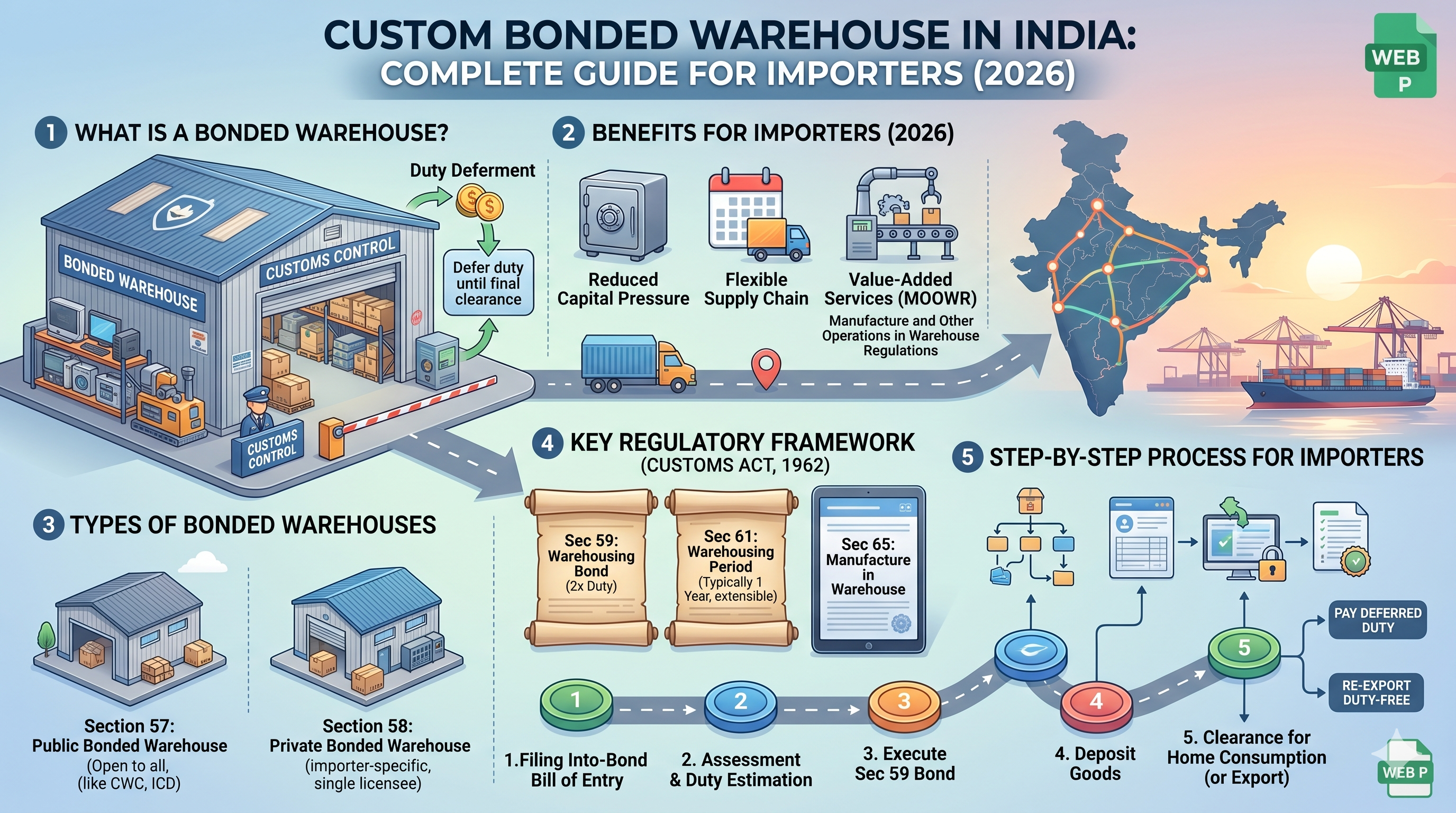
- Bill of Entry Filing on ICEGATE The CHA files the Bill of Entry electronically, selecting the correct type -- Home Consumption for standard clearance, Into Bond for bonded warehousing, or Ex-Bond for clearance from a bonded warehouse. The RMS assigns a channel and the assessment process begins.
- Assessment and Query Management The customs officer assesses the Bill of Entry according to the assigned channel. The CHA monitors ICEGATE continuously and responds to any officer queries promptly. Delayed or incomplete responses stall the file and extend clearance time.
- Cargo Examination Coordination If examination is ordered under orange or red channel, the CHA coordinates with the CFS or port to schedule the examination. The CHA attends in person, presents cargo, provides all required documentation to the examining officer, and records the examination report. Discrepancies are addressed on the spot before they become formal findings.
- Duty Payment Once assessment is finalised, the CHA initiates payment through the ICEGATE payment gateway. The duty challan is generated electronically and payment confirmation is recorded before proceeding to cargo release.
- Out of Charge and Cargo Delivery With duty paid and no pending compliance requirements, the system grants Out of Charge. The CHA coordinates with the port authority or CFS for container release and arranges delivery to the importer's premises or bonded warehouse as required.
Export Customs Clearance: The CHA's Role
Export clearance follows a parallel process with different documents and distinct regulatory touchpoints. The CHA customs agent's role on the export side is equally critical to preventing delays and protecting the exporter's incentive entitlements.
Shipping Bill Filing
The Shipping Bill is the primary export declaration. The CHA files it on ICEGATE before cargo arrives at the port or airport. The type filed depends on the applicable export scheme -- a Free Shipping Bill for standard exports, a Drawback Shipping Bill where duty drawback is claimed, or a Bill filed under other incentive notifications.
Goods Registration and Let Export Order
After cargo arrives at the port and is registered, customs grants the Let Export Order (LEO) -- the formal authorisation to load cargo. The CHA manages all pre-LEO activities including documentation verification and examination coordination. With the Auto-LEO facility introduced in 2026, LEO is now granted automatically for Shipping Bills not selected for examination, significantly reducing export processing time for compliant exporters.
RoDTEP Compliance
The CHA ensures the Shipping Bill correctly declares the applicable RoDTEP (Remission of Duties and Taxes on Export Products) scheme rate. Incorrect or missing declarations result in denial of export benefits, directly affecting the exporter's cost structure. The CHA ensures RoDTEP credits are correctly linked to the Shipping Bill so they flow automatically to the exporter's account on ICEGATE.
GST Refund on Exports
Exporters who export under Letter of Undertaking are entitled to IGST refund. The CHA ensures the Shipping Bill and the exporter's GST returns are correctly matched through the GSTN-ICEGATE integration. Mismatches between the two systems are a common cause of refund delays and the CHA's role is to prevent them at the point of filing.
The Indian Customs Duty Structure: What the CHA Calculates
Accurate duty calculation is one of the most technically demanding aspects of CHA customs work. The duty structure for imports involves several components applied in a specific sequence, each on a different base value.
| Duty Component |
Applied On |
Notes |
| Basic Customs Duty (BCD) |
Assessable Value (CIF plus 1% landing charge) |
Rate varies by HS code. Commonly 5% to 20% for most goods. Can exceed 100% for certain sensitive products. |
| Social Welfare Surcharge (SWS) |
BCD amount |
10% of BCD. Not levied if BCD is nil or fully exempted. |
| Integrated GST (IGST) |
Assessable Value plus BCD plus SWS |
Mirrors the domestic GST rate: 5%, 12%, 18%, or 28%. Claimable as Input Tax Credit by GST-registered importers. |
| Anti-Dumping Duty (ADD) |
Assessable Value or per unit depending on notification |
Levied on specific goods from specific countries where dumping is established by DGTR. Must be verified per HS code and country of origin before every filing. |
| Safeguard Duty |
Assessable Value |
Temporary duty to protect domestic industry. Commodity-specific and time-bound. |
| Countervailing Duty (CVD) |
Assessable Value plus BCD plus SWS |
Levied on subsidised imports from specific countries where DGTR establishes material injury to domestic industry. |
| Compensation Cess |
Assessable Value plus all duties above |
Applicable on select goods such as tobacco products, automobiles, and certain luxury items. |
Important for Importers: Getting the HS code wrong by even one sub-heading can change the BCD rate, trigger anti-dumping duty, or attract mandatory BIS certification requirements that were not planned for. A skilled CHA customs agent classifies correctly at the point of filing -- protecting you from post-clearance audit demands that can arrive months or years after shipment.
Partner Government Agencies: The Hidden Complexity in CHA Customs
For many product categories, customs clearance requires more than paying duty and receiving Out of Charge. Partner Government Agencies have regulatory oversight over specific goods and their approval is a mandatory prerequisite for customs release. Cargo cannot be cleared without it, no matter how accurately the Bill of Entry is filed.
This is one area where inexperienced CHA agents cause the most costly delays -- by failing to identify PGA requirements before shipment arrival, leaving importers with cargo accumulating demurrage at port while approvals are chased under time pressure.
| Regulatory Agency |
Product Categories |
Approval Required |
| FSSAI |
Food products, food additives, nutraceuticals, beverages |
No Objection Certificate or Import Clearance Certificate |
| CDSCO |
Pharmaceuticals, medical devices, cosmetics |
Drug Import License, Registration Certificate, NOC for samples |
| BIS |
Electronics, electrical goods, toys, cement, steel products |
Mandatory BIS certification or test report conformance under quality control orders |
| WPC -- DOTD |
Wireless equipment, radio devices, telecom products |
Equipment Type Approval Certificate |
| Plant Quarantine |
Seeds, plants, fresh produce, agricultural goods |
Phytosanitary certificate from origin plus import permit from NPPO India |
| Animal Quarantine |
Animal products, veterinary biologicals, animal feed |
Sanitary Import Permit plus veterinary health certificate from origin |
| AERB |
Radiation-emitting equipment, nuclear materials |
Atomic Energy Regulatory Board clearance |
| PESO |
Explosives, petroleum equipment, gas cylinders |
Petroleum and Explosives Safety Organisation permit |
Arrow Shipping advises clients on PGA requirements before shipments are dispatched from the country of origin. This pre-shipment advisory ensures that every mandatory certificate and approval is in place before cargo arrives at Indian ports -- eliminating the costly situation of cargo sitting at port while approvals are obtained under demurrage pressure.
AEO Certification and Its Effect on CHA Customs Clearance
The Authorised Economic Operator (AEO) programme is India's trusted trader framework. It recognises importers, exporters, logistics providers, and CHA agents who demonstrate consistent compliance, financial soundness, and supply chain security. AEO certification is issued by CBIC in three tiers for importers and exporters.
AEO-T1 is the entry-level tier. Benefits include faster document assessment, priority examination scheduling, and easier access to customs officers for query resolution.
AEO-T2 provides enhanced benefits including Auto-OOC eligibility, Direct Port Delivery priority, and dedicated customs assistance for complex clearances.
AEO-T3 is the highest tier, providing the lowest examination frequency of any importer category, expedited processing across all Indian ports, and direct relationships with senior customs officers for dispute resolution.
CHA agents can hold AEO-LO (Logistics Operator) certification. Arrow Shipping is AEO-certified, which means every client shipment carries the credibility of a trusted, government-recognised customs broker. Customs officers give greater confidence to filings from AEO-certified CHAs, resulting in faster assessments, fewer unnecessary queries, and smoother clearances. For clients who are not yet AEO-certified themselves, working with an AEO-certified CHA is the most direct way to begin benefiting from the RMS trust framework while building their own compliance history.
Customs Disputes: How a CHA Customs Agent Protects Your Interests
Even with accurate filings, customs disputes can arise -- particularly around valuation, classification, or examination findings. An experienced CHA customs agent is your first line of defence when challenges arise.
Show-Cause Notice
If customs believes there has been a duty short-payment, a misdeclaration, or a compliance breach, they issue a Show-Cause Notice. The CHA drafts the written reply, assembles supporting evidence, and represents the importer at the personal hearing before the adjudicating officer. The quality of the reply directly determines the outcome of the adjudication.
Provisional Assessment
When the correct duty cannot be determined at the time of clearance -- for example when a final price is subject to a post-shipment adjustment -- the CHA can request provisional assessment. Cargo is released upon payment of provisional duty and execution of a bond. The CHA monitors and finalises the assessment when correct information is available.
Customs Valuation Disputes
Customs officers can reject a declared transaction value and substitute a higher value based on comparable import data. The CHA argues the case with documentary evidence -- contracts, price lists, related-party pricing disclosures, and market data -- to defend the declared value and prevent unjustified duty demands.
The Appeals Process
If an adjudication order goes against the importer, the CHA guides the client through the formal appeals hierarchy. The Commissioner (Appeals) is the first level. Larger disputes proceed to the CESTAT -- Customs, Excise and Service Tax Appellate Tribunal. For significant legal questions, cases can proceed to the High Court and ultimately the Supreme Court of India.
Post-Clearance Audit: Why CHA Compliance Records Matter Long After Clearance
Many importers assume that once cargo is released and Out of Charge is granted, all customs liability is resolved. This is a costly misconception.
Under the Customs Act, 1962, the CBIC's Audit Commissionerate conducts post-clearance audits of importers' records, reviewing past transactions to verify that correct duties were paid, correct exemptions were claimed, and correct classifications and values were declared. These audits can cover up to five years of past transactions.
A CHA customs agent with disciplined compliance practices provides several layers of protection. Complete records of every Bill of Entry, examination report, duty payment challan, and customs correspondence must be maintained for the full statutory period. Consistent HS code classification across all shipments of the same product builds a defensible record -- inconsistency is one of the first patterns that audit officers identify.
Where duty exemptions are claimed under FTA certificates of origin, EPCG scheme, EOU benefits, or other notifications, the CHA ensures all underlying eligibility documents are obtained, verified, and archived at the time of import. Claiming an exemption without the correct supporting documentation can result in a full duty demand plus interest in a post-clearance audit, even years after the original clearance.
If an error is discovered internally after clearance, a proactive CHA can file for voluntary payment of differential duty before an audit detects it. Voluntary compliance significantly reduces penalty exposure and is always preferable to being found in default during a formal audit.
Audit Risk: Post-clearance audit demand notices can reach crores of rupees for businesses that have been making systematic classification or valuation errors across multiple shipments. The cost of a professional, experienced CHA customs agent is a fraction of a single audit demand. Accuracy at the point of filing is not just operational best practice -- it is essential financial protection for your business.
Why Choose Arrow Shipping as Your CHA Customs Agent
Arrow Shipping has operated as a licensed Customs House Agent since 1994. Over three decades, we have managed customs clearances across every major commodity category -- pharmaceuticals, automotive components, electronics, industrial machinery, medical equipment, textiles, food products, and raw materials -- at Chennai, Delhi, and all major Indian ports and airports.
Our AEO certification reflects our standing within the Indian customs system: a trusted, compliant, and consistently accurate customs broker. This status benefits clients directly through faster RMS channel assignments, Auto-OOC eligibility, and priority examination scheduling when examination is unavoidable.
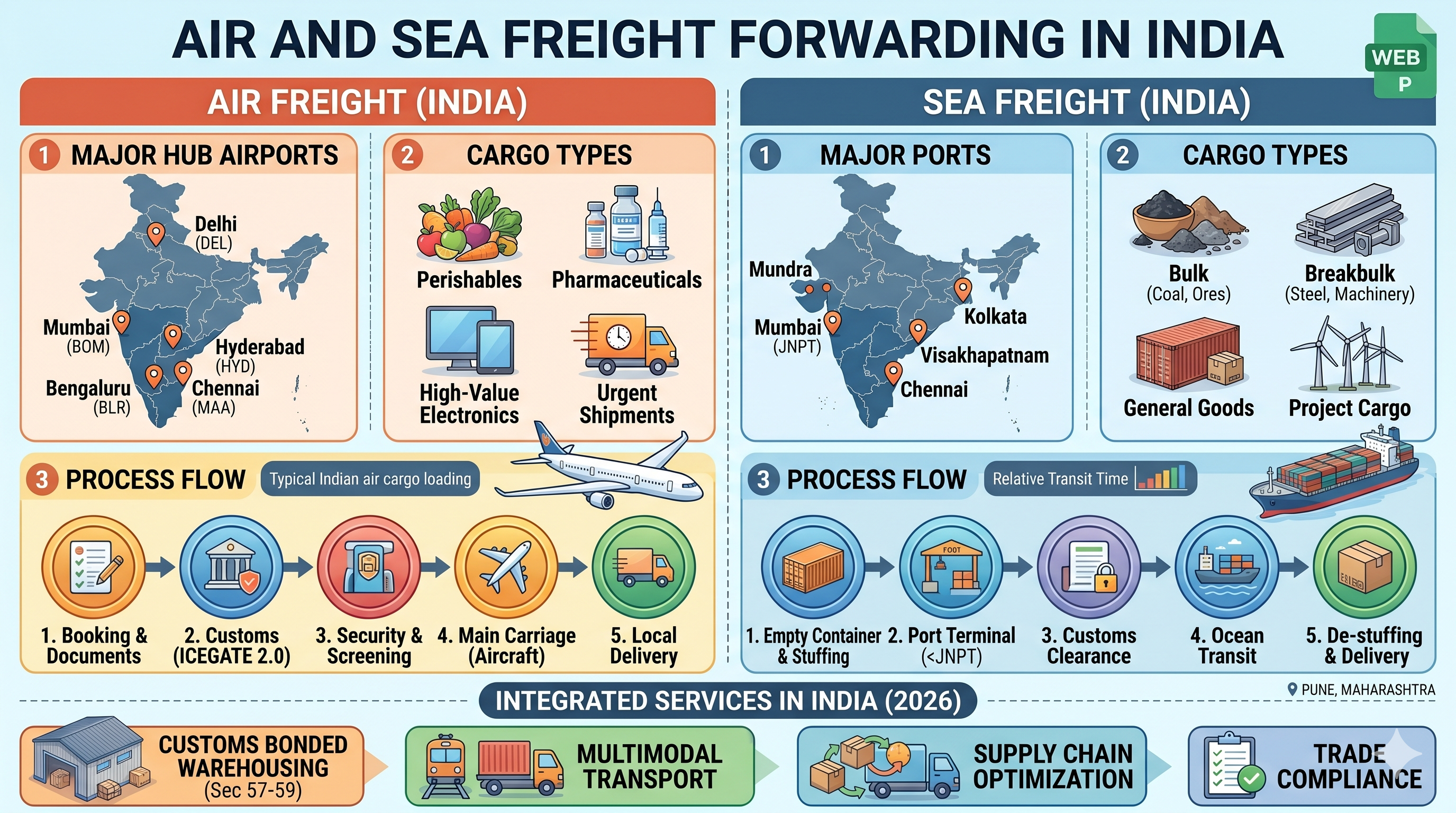
We operate as an integrated service provider -- combining licensed CHA customs clearance with air and sea freight forwarding, custom bonded warehousing, and cargo transportation under one roof. This eliminates the coordination gaps that arise when customs clearance and logistics are handled by separate providers, and gives clients a single point of accountability for their entire import or export transaction.
Our team advises clients on PGA requirements before shipments are dispatched, identifies applicable duty exemptions and FTA benefits, and monitors regulatory changes affecting specific commodity categories. When disputes arise, we represent clients with the authority and documentation that comes from 30 years of direct customs experience.
Frequently Asked Questions
What is CHA in customs?
CHA in customs stands for Customs House Agent. It is a professional licensed under the Customs Brokers Licensing Regulations (CBLR), 2018 by CBIC to file import and export documents, pay duties, and represent importers and exporters before Indian customs authorities at all ports, airports, and inland container depots across India.
What is ICEGATE and how does a CHA use it?
ICEGATE is the Indian Customs Electronic Gateway -- the national customs portal operated by CBIC. A CHA agent uses ICEGATE to file Bills of Entry and Shipping Bills, pay duties electronically, monitor assessment status, respond to customs queries, and access examination orders and OOC or LEO confirmations. All CHA customs filings in India are made through ICEGATE.
What are the four customs channels in India?
India's Risk Management System assigns Bills of Entry to four channels: Green for straight-through clearance with no examination, Yellow for document verification only, Orange for document check plus physical examination, and Red for intensive physical and document examination. The channel determines the speed and complexity of the clearance process for each shipment.
What is Out of Charge in customs?
Out of Charge (OOC) is the formal customs order that authorises release of imported goods after all applicable duties are paid and any examination is completed. The port authority cannot release cargo to the importer without an OOC order on record. With the 2026 Auto-OOC facility, eligible importers now receive OOC automatically without manual officer intervention.
Can a CHA agent challenge a customs duty demand?
Yes. When customs issues a differential duty demand through a Show-Cause Notice, the CHA drafts the written response, presents documentary evidence, and represents the importer at the personal hearing. If the adjudication order is unfavourable, the CHA guides the appeal through the Commissioner (Appeals), CESTAT, and if necessary the High Court or Supreme Court.
What is a post-clearance audit?
Post-clearance audit is a CBIC process in which past import transactions are reviewed for compliance, typically covering up to five years. Auditors verify that correct duties were paid, correct exemptions were claimed, and correct classifications and values were declared. A professional CHA agent protects importers through complete record maintenance, consistent classification, and proactive correction of any errors before they are discovered in an audit.
How does AEO certification help in CHA customs clearance?
AEO certification gives trusted importers and their CHA agents priority treatment in the customs system -- more green channel clearances, eligibility for Auto-OOC, fewer examinations, and faster dispute resolution. Arrow Shipping is AEO-certified, meaning clients benefit from our trusted trader status through faster, smoother clearances across all Indian ports and airports.
Work With a CHA Customs Agent Who Knows the System Inside Out
Arrow Shipping has operated as a licensed, AEO-certified Customs House Agent since 1994. We manage the full customs process from ICEGATE filing and duty calculation to examination coordination, PGA approvals, and post-clearance compliance. Chennai and Delhi operations, coverage across all Indian ports.
Get a Free Quote Call +91 91761 81333
Related Services and Resources
Written by Arrow Shipping -- Licensed Customs House Agent Since 1994
Arrow Shipping is an AEO-certified, government-recognised Customs House Agent with over 30 years of hands-on experience in CHA customs operations across Chennai, Delhi, and all major Indian ports and airports. This guide reflects our operational expertise and is updated to reflect CBIC regulations, ICEGATE systems, and trade policy as of 2026. For expert guidance on your specific import or export requirement, contact us at contact@arrowshipping.in or call +91 91761 81333.